

Ten Places on Earth That Look Like They’re From Another World
Imagine the Earth’s crust – most people think of it as solid rock, dry and dense. However, recent research has revealed a fascinating geological phenomenon happening beneath the Earth’s surface. In certain places, the Earth's crust is actually "dripping" downward. This process could change how we understand the Earth, as well as other planets in our solar system.
What is Lithospheric Dripping?
Scientists have discovered a new type of plate tectonics, known as lithospheric dripping. This process occurs when part of the Earth's crust becomes so heated that it turns into a sticky, gooey substance. Just like honey or syrup, it slowly drips down into the deeper layers of the Earth.
How does it happen?
- The lower part of the Earth’s crust heats up and becomes viscous.
- The molten crust begins to drip down into the Earth's interior, pulling the solid crust down with it, and creating a depression.
- When the molten material finally detaches from the crust, the surface above it bounces back, creating a bulge.
The Konya Basin and the Discovery
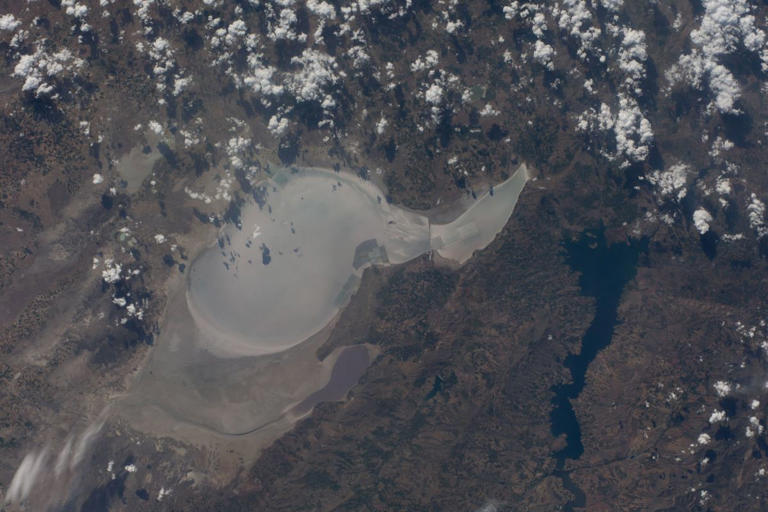
A recent study focused on the Konya Basin in Turkey’s Central Anatolian Plateau. Researchers noticed something strange: the land in this area is sinking, even though the surrounding region is rising. This led them to investigate the phenomenon of lithospheric dripping.
Key Findings:
- The Konya Basin is sinking at a rate of 20 millimeters (0.8 inches) per year.
- The area is part of a larger process of rebound in the plateau, where molten material from the crust has already dripped into the mantle millions of years ago, causing the land to rise.
- The Konya Basin is now forming a smaller drip, which is causing the land to sink.
The Study's Groundbreaking Insights
Scientists used advanced tools and data to better understand the geological events happening in the Konya Basin. They found that the mantle below the basin had thickened, with dense material present, indicating a likely lithospheric drip.
How was the study conducted?
- Researchers used lab experiments to simulate the dripping process using a sticky silicone polymer (polydimethylsiloxane) to represent the lower mantle.
- They also used modeling clay and other materials to mimic the Earth's crust.
- The experiment showed that as the dense "seed" material dripped down, it caused the surface above it to sink, creating a basin.
Why is This Important?
The findings have significant implications for our understanding of the Earth and its geological processes:
- Lithospheric dripping is not a one-time event; it can trigger additional tectonic activities deep inside the planet.
- The researchers noted similarities with the Arizaro Basin in the Andes Mountains of South America, suggesting that this process can occur in different parts of the world.
Implications for Other Planets
The study has broader implications beyond Earth:
- The findings could be used to study similar processes on planets like Mars and Venus, where the geological conditions are different but the mantle dynamics are similar.
- This research opens up new possibilities for understanding the geology of other planets in our solar system.
The discovery of lithospheric dripping changes how we view the Earth’s interior. It shows that the planet’s surface is much more dynamic than previously thought. As we learn more, we could apply these insights to understand the geology of other worlds, like Mars and Venus.
Source:
- Andersen, J., et al. (2024). Study on Lithospheric Dripping. Nature Communications.
Comments
Post a Comment